Chris Curl,
Editor
Aug. 20, 2026
The debt machine is winding up again…
And this time, Washington is not even pretending the bond market can be left entirely to its own devices.
In my previous articles, I made a straightforward argument: America’s fiscal path is not fixed by a better speech, a new committee, or another round of optimistic projections. The debt continues to compound, interest costs continue to consume a larger share of federal revenue, and the political system still has no credible appetite for the combination of spending restraint, tax increases, and economic pain that a genuine reset would require. Gold did not need a crisis headline to become relevant again. It only needed investors to recognize that the problem is structural.
That recognition is starting to show up in policy.
Treasury Secretary Scott Bessent has moved to at least double the size of Treasury’s buybacks of longer-dated government bonds, targeting the 10 to 30-year portion of the curve after yields surged and buyers stepped back. The maximum purchase size will rise from $2 billion to at least $4 billion per operation beginning in September, with the broader program potentially taking Treasury repurchases to as much as $83 billion through early November.
The official language is about liquidity support. The practical message is much clearer: Washington is worried about the long end of the curve.
That matters because long-term yields are where the debt machine starts to bite back. When investors demand higher compensation to lend to the U.S. government for 10, 20, or 30 years, the pain does not stay trapped inside the bond market. It travels outward… into mortgage rates, corporate borrowing costs, federal interest expense, and the broader valuation structure of financial assets. The 10-year yield had climbed toward 4.7% and the 30-year above 5.2% before the announcement, levels that quickly become politically and fiscally uncomfortable in a government financing trillions in deficits.
So Bessent is buying time.
Or, more precisely, the Treasury is stepping in as a larger buyer of long-dated paper while continuing to finance itself with a system increasingly dependent on shorter-term issuance and constant rollover. It may help calm a stressed market at the margin. The 10-year yield dropped after the announcement, and the 30-year fell sharply as well. But it does not make the debt smaller. It does not create a new natural buyer for trillions in future issuance. And it certainly does not solve the core problem that made those yields rise in the first place.
It is a management strategy for a system that cannot afford to let price discovery become too honest. Or what is commonly called, “kicking the can.”
This is exactly why gold’s bounce matters.
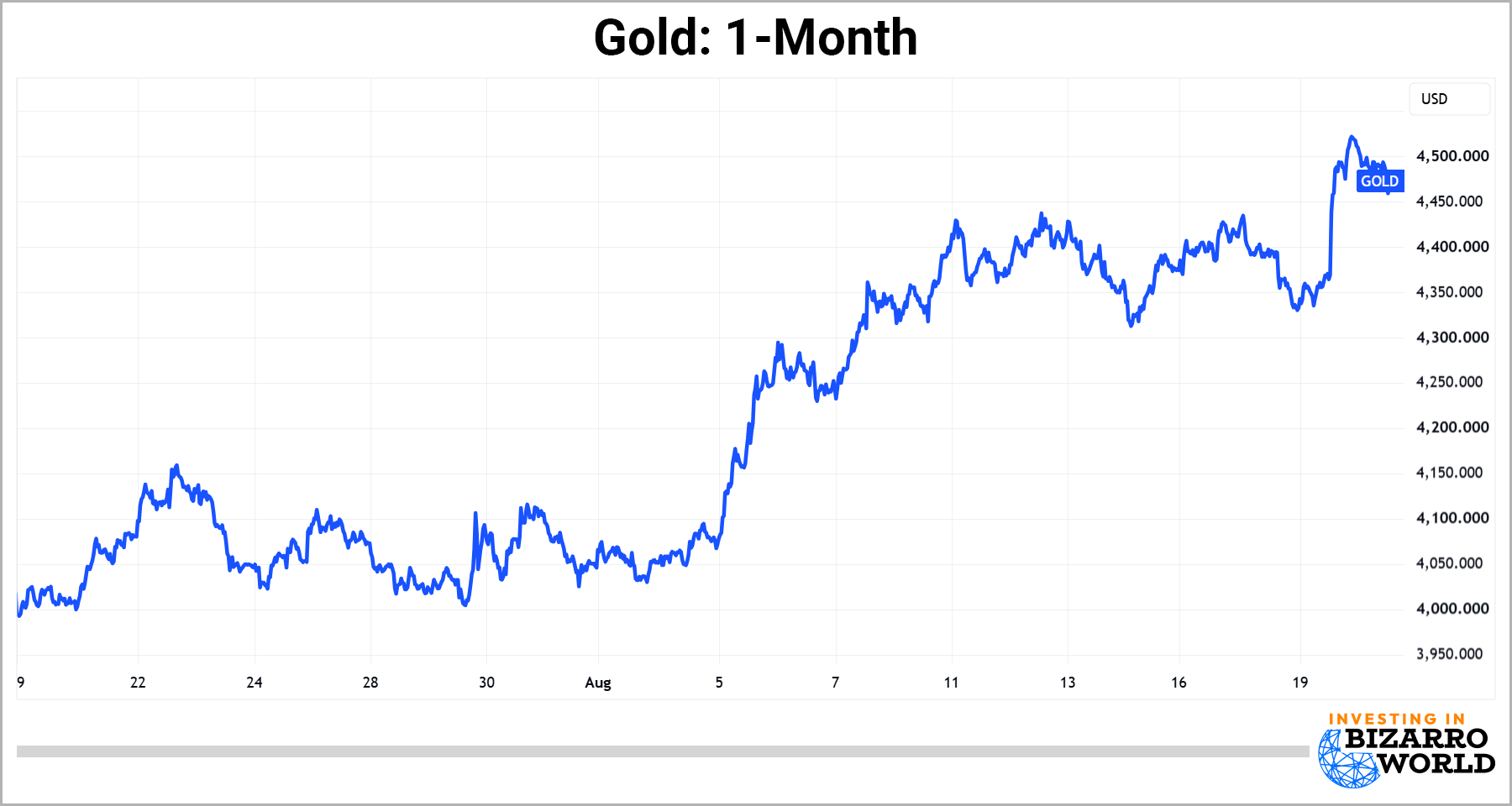
Gold is not responding to one press release or one buyback operation. It is responding to the larger signal: when borrowing costs become too high for the government to tolerate, the solution is not fiscal discipline. The solution is usually some combination of intervention, financial repression, curve management, and eventually a currency that carries a little less purchasing power than it did before.
That is the quiet logic behind hard money.
Gold has no board meeting, no quarterly refunding calendar, and no political constituency demanding that it make debt cheaper. It cannot be issued to cover a deficit or repurchased to make a chart look better. It is simply the asset people return to when they realize that paper promises are multiplying faster than the credibility required to support them.
And the gold stocks are still the underappreciated part of this equation.
The metal has started to respond to fiscal reality. The miners, in many cases, are still priced as if gold is a temporary trade and the old financing, permitting, and cost pressures will define the next cycle. That disconnect is where the opportunity lies. A sustained move higher in gold does more than improve the headline price of bullion; it expands margins, revives project economics, improves financing options, and can completely rerate the companies with real deposits in stable jurisdictions.
The debt machine is not slowing down. It is becoming more active, more expensive, and more openly managed.
Bessent’s long-bond buybacks are not a reason to panic. They are a reason to pay attention. They are another indication that the market is beginning to test the limits of America’s fiscal credibility—and that policymakers are responding in the way policymakers usually do: by managing the symptoms while the underlying condition keeps getting worse.
That is bullish for gold.
And it is why the strategy Nick Hodge has been laying out through Underground Alpha matters more now than it did last November. The best opportunities in a hard-asset cycle are rarely obvious at the beginning. They sit in the gap between a rising commodity price and a market that has not yet fully repriced the companies that own the ground.
Gold is waking up. Washington is managing yields. And the debt machine is running hot.
The question is not whether the system can buy itself more time.
It can.
The question is whether you profit from the debt machine or let it bury you.
Click here to get started.
Keep coming back,

Chris Curl
Editor, Bizarro World