Chris Curl,
Editor
Aug. 6, 2026
Gold is doing exactly what it tends to do when governments refuse to change course: it is quietly starting to move.
Back in November, the case was simple. The U.S. was on a ruinous fiscal path: $38 trillion in debt, interest bills racing toward a trillion dollars a year, and policymakers with no credible plan beyond “borrow more and hope it works out.”
The conclusion then was that critical resources (copper, rare earths, strategic metals) would become the shield for anyone who didn’t want their savings trapped inside a melting currency. That argument has only aged better. But something important has shifted on top of it.
Gold is finally waking up.
After a long, frustrating stretch where it seemed content to drift while the Fed hiked, the dollar wobbled, and deficits exploded, gold has started to bounce. It’s not just a one‑day spike or a meme candle; it’s the beginning of a repricing that lines up almost perfectly with the math we laid out last year.
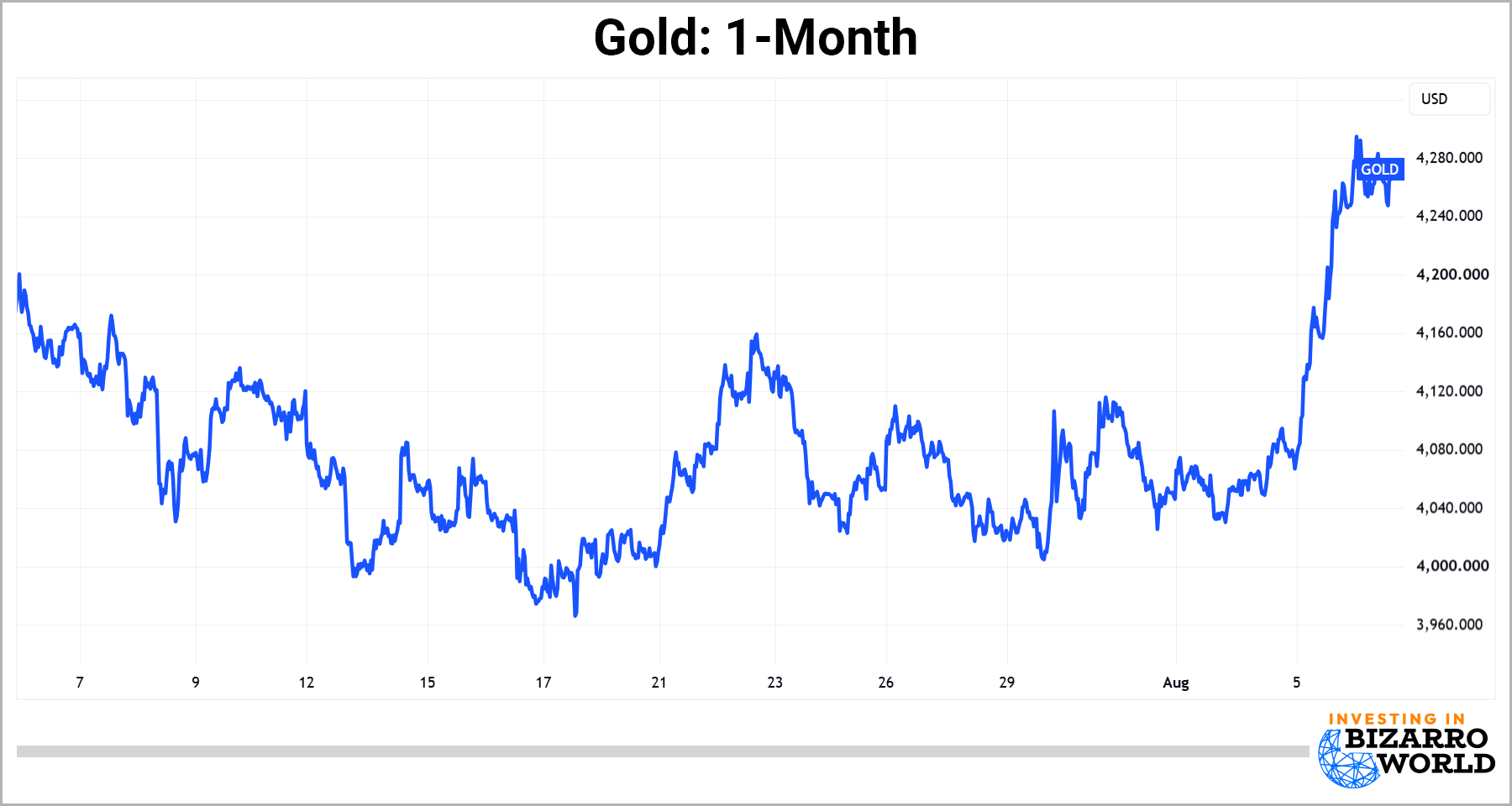
When a government is running $1.8 trillion deficits, rolling over debt at higher rates, and openly debating how much inflation it can get away with, hard money eventually reclaims some of the purchasing power paper has been stealing from it.
The key point: gold doesn’t need a crisis to move. It just needs enough people to admit that the crisis is structural.
That’s where gold stocks come in and why the setup today looks a lot like the critical‑minerals window we flagged before the crowd showed up.
The miners have lagged badly. While spot gold has been grinding higher over the last few years, many gold equities have spent that time working through bear markets of their own: financing stress, permitting delays, rising costs, and general investor apathy toward anything that doesn’t end in “AI.” That has left a strange dislocation: a hard asset that is starting a new leg higher, and a group of companies that pull it out of the ground still trading as if the last cycle never ended.
History says that gap doesn’t last.
When gold starts to move with conviction, gold stocks are usually not far behind. Their operating leverage to the metal (fixed costs plus rising realized prices) turns small moves in the commodity into outsized moves in earnings and, eventually, share prices. That is why the biggest multi‑baggers in past currency‑stress periods weren’t the bars in a vault; they were the well‑run producers and developers with real assets, competent management, and the right jurisdiction.
That is exactly the angle Nick Hodge and Rick Rule leaned into with their recent presentation on what they call “The Best Gold Stock in America.” Rick has made a career out of this kind of setup (scarce, strategic hard assets bought when they are still hated) and the new presentation applies that same lens to U.S. gold at a moment when Washington is quietly rediscovering that it needs domestic supply.
Because here’s the other piece most investors are missing: the policy tailwinds that were so obvious in critical minerals are now blowing in gold’s direction too.
The White House has begun prioritizing and accelerating support for companies exploring and developing U.S. gold mining assets. This means permitting timelines inch shorter, funding channels open, and a layer of strategic importance wraps around projects that used to be treated as just another mine. When governments realize they can’t print credibility, they start caring a lot more about what sits in the ground under their own flag.
Put all of this together and the picture is clear:
- The fiscal math has only gotten worse since last November.
- Gold is bouncing in exactly the environment it was built for.
- Gold stocks, still priced like it’s late‑cycle 2018, have not yet fully responded.
- Policy is shifting toward securing strategic metals at home—including gold.
- One specific American name now sits at the intersection of those forces, which is why Nick and Rick built a whole presentation around it.
If you took my November editorial seriously, this is the logical next step. Back then, the focus was on building a shield with critical minerals before the crowd realized how central they were to national security, electrification, and supply chains. Now that same logic is moving into the monetary layer. The shield is not just copper, lithium, and rare earths anymore. It is gold, and the companies that can produce it in the right places, under the right policies, at the right time.
Underground Alpha is where that work is being done.
If you want to understand why gold is bouncing back, which U.S. names could move first, and why a single “best gold stock in America” might end up on Washington’s radar before Wall Street’s, click here to watch Nick Hodge’s presentation with Rick Rule and see how they’re positioning now.
In a world drifting toward “gradually, then suddenly,” you don’t get many chances to reset your exposure to hard money before the market catches on. This is one of them.
Keep coming back,

Chris Curl
Editor, Bizarro World