Chris Curl,
Editor
June 25, 2026
SpaceX has come full circle. After one of the most hyped IPOs in market history, the stock is back near where it started. The headlines are quieter. The launch‑day euphoria is gone.
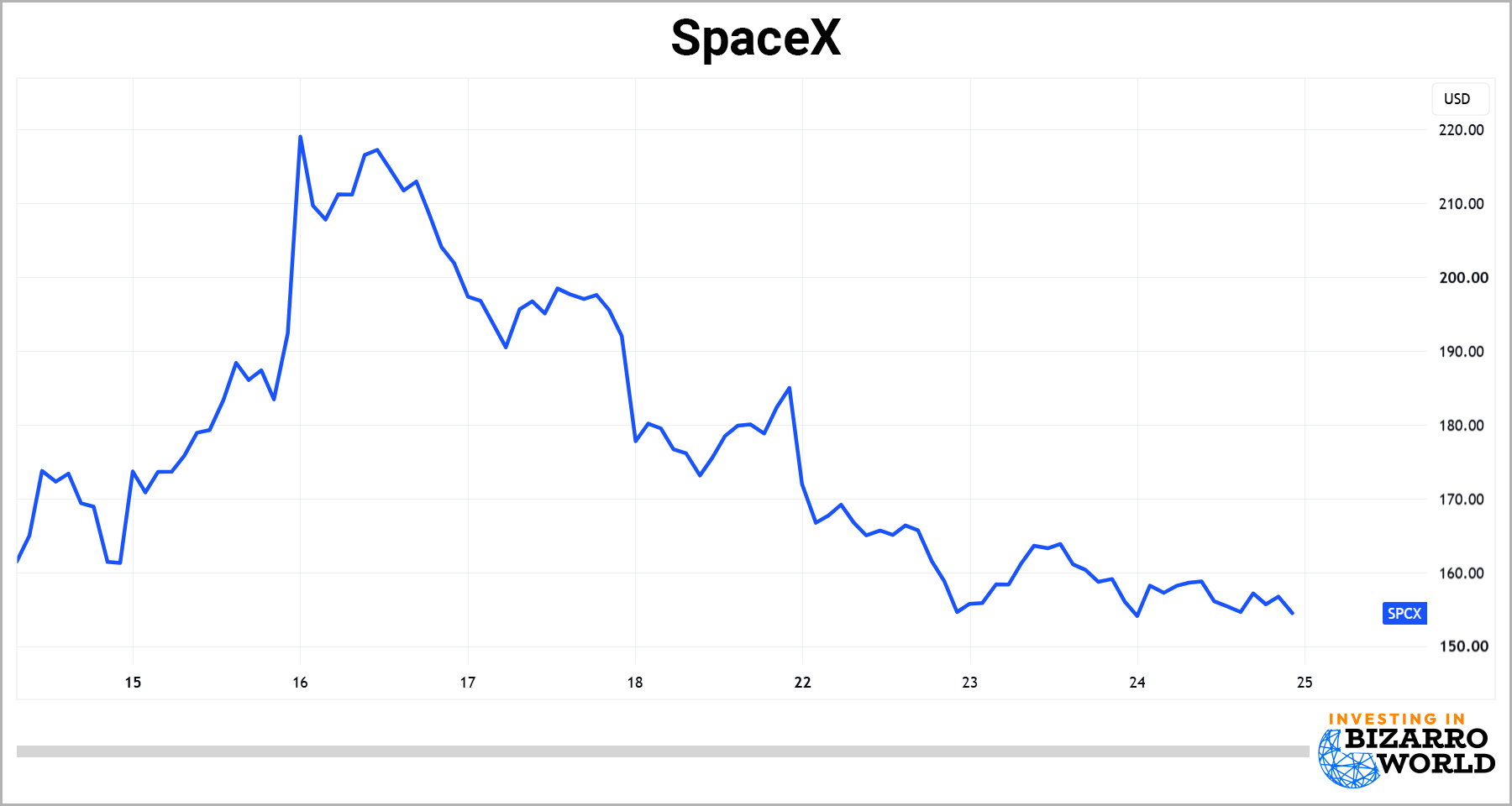
From day one, I called SpaceX a “Great Story, Bad Price.” Not because I doubted the company (I think it may become one of the most important industrial enterprises ever built) but because of what investors were being asked to pay for that story.
Story vs. stock
SpaceX isn’t just a rocket company.
It’s a launch provider, communications network, defense contractor, AI infrastructure player, and potential backbone of space‑based commerce… all at once. It sits at the intersection of: space commercialization, global connectivity, defense, AI, and advanced manufacturing.
That’s why investors entertained a 1.75 trillion‑dollar valuation. The narrative was irresistible: reusable rockets, Starlink, a future beyond Earth. But stories and investments are not the same thing.
The numbers under the dream
At IPO, most people focused on the vision, not the financials.
Yes, SpaceX was doing close to 19 billion dollars in revenue. Yes, Starlink was growing fast. Yes, launch demand was strong.
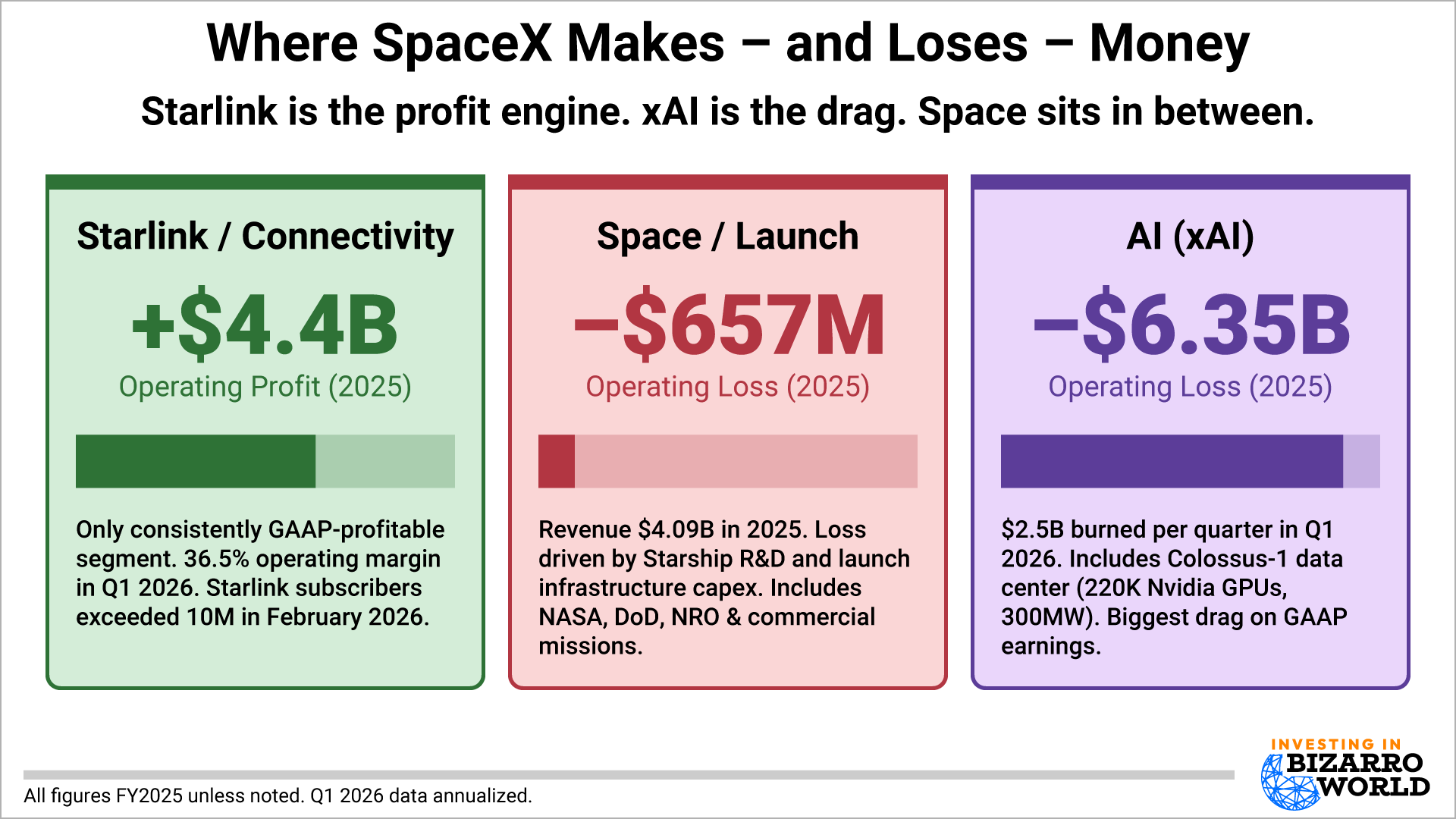
But the company was still losing billions, and xAI was burning huge amounts of cash to build one of the largest AI compute stacks on the planet. In reality, SpaceX was three different businesses:
- Starlink: profit engine
- Launch: roughly break‑even
- AI: massive cash burn
That’s a venture‑style profile rather than a mature utility. Yet investors were asked to pay a trillion‑plus valuation as if all three segments were already firing perfectly. That’s where the disconnect sat.
Admire the company. Be ruthless on price.
You can love a company and still refuse to buy the stock.
At IPO pricing, investors weren’t getting a margin of safety; they were buying maximum optimism. Every future win (Starlink expansion, launch contracts, AI breakthroughs) was effectively pre‑priced. The offering assumed an almost flawless execution path.
History shows that even great companies can be bad investments when you overpay. The question is rarely “Will it succeed?” but “Will it succeed enough to justify what you already paid?”
That’s why Digital Dispatch readers were told not to chase the opening print… not because SpaceX was doomed, but because expectations were simply too high.
The bigger lesson: AI is physical
The most important thing about SpaceX may be what it reveals about the broader tech economy.
Investors used to treat AI as a pure software story. It’s now clear AI is an infrastructure story:
- Data centers
- Power generation and transmission
- Fiber and satellite networks
- Land, water, copper
- Robots and automation
Every AI breakthrough sits on top of physical assets. That’s why I spend so much time on power, copper, robotics, and industrial infrastructure in Digital Dispatch. Those aren’t side notes; they’re the very foundation.
SpaceX is one visible node in that stack. Underneath it sits dozens of less flashy businesses: power producers, copper developers, networking firms, AI hardware makers, robotics and automation platforms, that often have better risk/reward because the market hasn’t fully connected the dots.
Buy the story. Wait for the price.
I still believe SpaceX could be one of the defining companies of this century. Starlink might become a global utility, launch economics may keep improving, and its AI investments might eventually throw off real profits. If that all happens, today’s valuation may look fine in hindsight.
But discipline matters more than hindsight. The stock’s round‑trip back toward IPO levels is a reminder that a great company and a great entry point are not the same thing.
At Digital Dispatch, the goal isn’t just to spot big stories like SpaceX but to find the quieter, better‑priced opportunities in the stack beneath them, where the risk/reward favors you instead of the narrative.
SpaceX’s lesson is simple: respect the ambition, respect the numbers, and buy the story only when the price finally makes sense. If you want help finding those moments (and the infrastructure names around them) that’s exactly what a Digital Dispatch subscription is for.
Click here to get started.
Keep coming back,

Chris Curl
Editor, Bizarro World