Chris Curl,
Editor
July 9, 2026
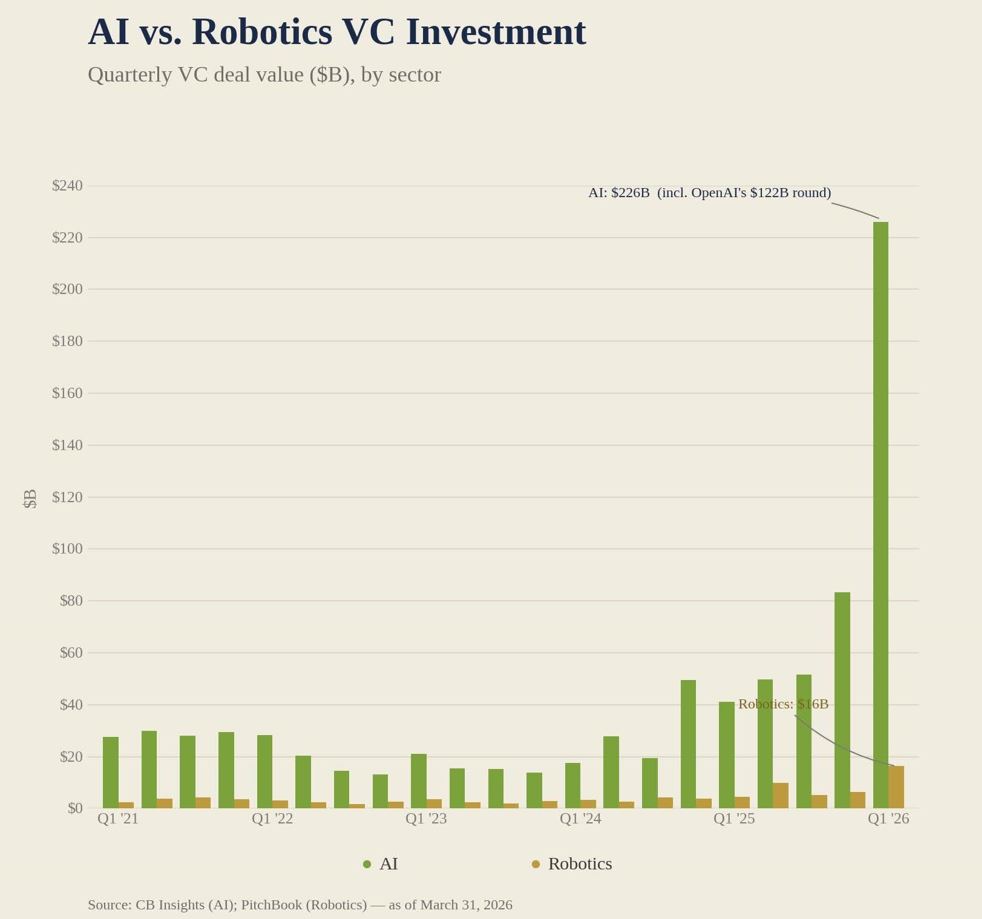
Robotics is about to do to the physical world what software AI just did to the digital one.
For the last few years, large language models have raced up the capability curve while robots quietly learned to walk, see, and manipulate the world without getting the same attention. In 2022, software AI felt like a curiosity; by 2024, it was reshaping entire industries.
Robotics is tracing that same curve a few years behind, and the sector is now approaching the point where capability, cost, and real-world deployment start to reinforce each other instead of bumping into the same constraints.
Right now, most general-purpose robots are roughly at a GPT‑2 level of intelligence: surprisingly capable in controlled environments, but still under‑deployed in the messy real world. They can move, grasp, and follow instructions, but they are not yet saturating factories, warehouses, or retail spaces.
That gap is exactly what makes this moment interesting.
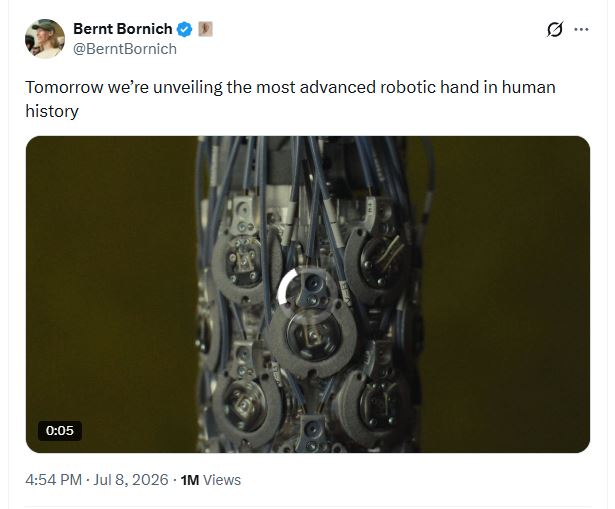
Human-like hand dexterity from platforms like 1X suddenly makes fine manipulation (packing, sorting, light assembly) feel viablel.
Nori L2’s more affordable profile pushes the price point down further, opening the door for companies that would have dismissed humanoids as “too expensive” even twelve months ago.
That combination (falling costs, rising capability, and better dexterity) is what precedes real deployment. Once robots can be bought at car-level prices instead of data-center-level prices, and once their hands can do more than simple pick‑and‑place, the question shifts from “if” to “when” and “how fast.” At that point, the robotics market stops trading as a niche curiosity and starts trading as infrastructure: something that absorbs capital every year because the alternative is paying more for labor and falling behind competitors who automate first.
This is where Digital Dispatch comes in.
It is designed to map this emerging ecosystem before it becomes crowded and expensive. It tracks the cost curves, the new platforms, the first meaningful deployments, and the companies quietly building the enabling layer behind the headlines.
When Isaac 1 ships, I’m interested in who is buying it and what they are actually doing with it. When 1X shows off human-like hand dexterity, I look at which supply chains and workflows can realistically absorb that capability. When Nori L2 drops the price floor, I ask which segments of the economy suddenly move from “maybe someday” to “we need to test this now.”
The goal is not to hype every robot that appears on a stage. The goal is to give you a clear view of where this curve is going (and where the real leverage sits) before the rest of the market starts treating robotics like it treated software AI in 2023: obvious, crowded, and already repriced.
Robotics is about to take off.
Digital Dispatch exists to make sure you are invested in the right picks when it does.
Click here to get started.
Keep coming back,

Chris Curl
Editor, Bizarro World