Chris Curl,
Editor
June 18, 2026
Well over a year ago, I wrote an editorial called “The Infinite Money Glitch: Analyzing MSTR’s Strategy", where I broke down how Michael Saylor turned a simple idea (raise capital, buy Bitcoin, let the stock premium fund the next round) into what looked like a self‑reinforcing machine.
The core loop was straightforward:
- Issue equity or debt at a premium.
- Use the proceeds to buy more BTC.
- Let the larger BTC stack pull the equity premium even higher.
- Repeat.
In that piece, I argued that this “glitch” only worked as long as three conditions held:
- Bitcoin kept rising on a multi‑year basis.
- Capital markets stayed open and willing to fund the story at a premium.
- The structure didn’t accumulate so many fixed claims (debt, preferreds) that they started to cap the upside or sharpen the downside.
Sixteen months later, all three pressure points are now front and center.
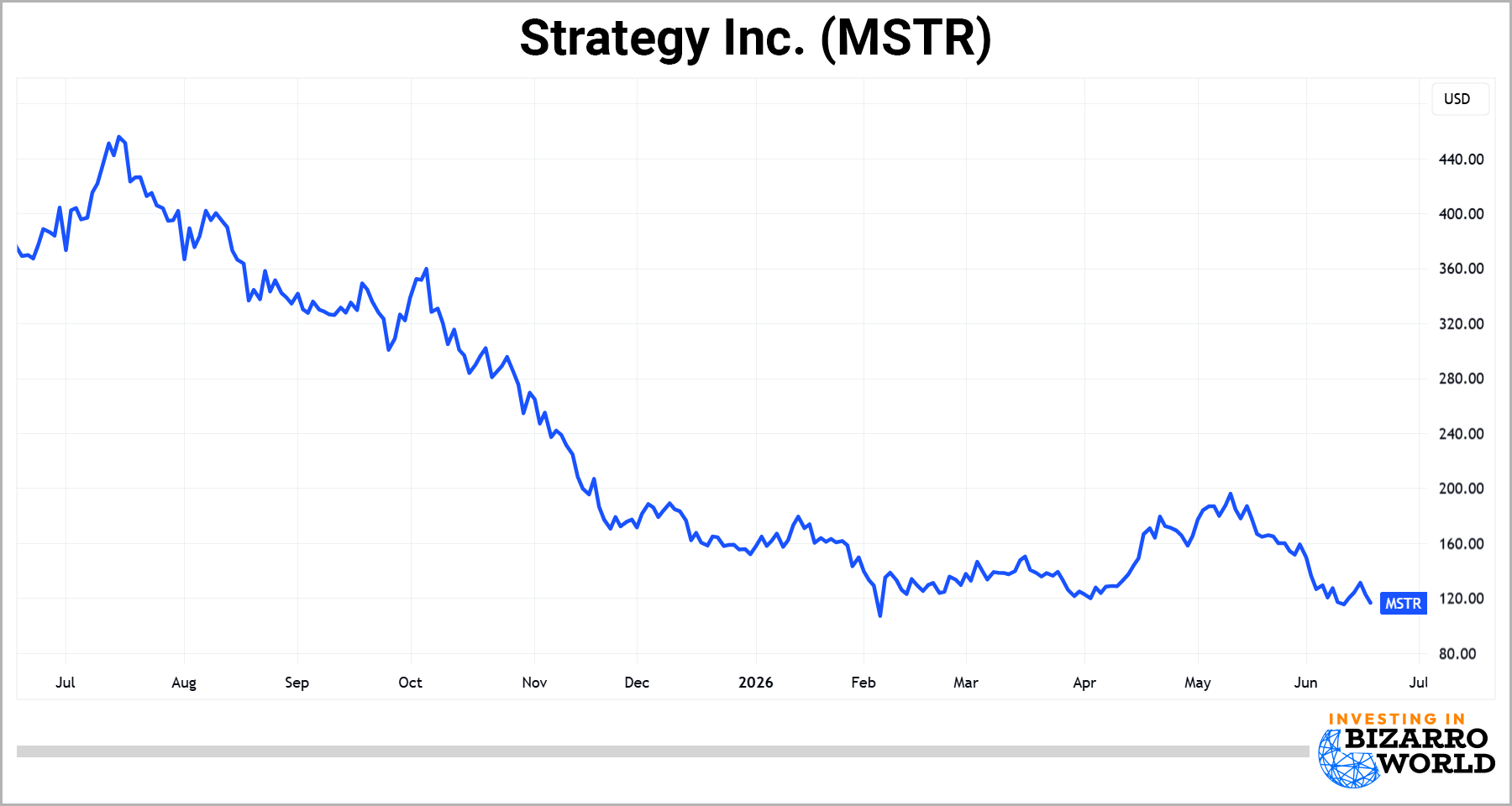
From Infinite Glitch To Finite Balance Sheet
Since that article, Strategy has doubled down on the idea by launching STRC, a variable‑rate preferred stock with a $100 stated amount and a monthly dividend that management can dial up or down to keep it trading near par. On paper, it looked like a cleaner, income‑friendly way to pipe traditional capital into the Bitcoin flywheel.
In practice, it has exposed exactly the weakness I warned about: once you promise a high, adjustable yield to keep the structure afloat, your “infinite money glitch” starts to look a lot more like a levered carry trade with a finite “years of BTC” runway.
To keep STRC near $100, Strategy has:
- Raised the dividend multiple times, from the initial 9% to around 11.5%+ on the $100 par.
- Leaned heavily on preferred and equity issuance to keep the Bitcoin buying going, even as volatility increased.
Every time that coupon ratchets higher, the annual obligation to STRC holders grows. Unless Bitcoin’s performance more than offsets that, the number of years the current BTC stack can support those payments shrinks which is exactly the “coverage erosion” problem I warned about in my original piece.
STRC’s Discount Is The Market Speaking
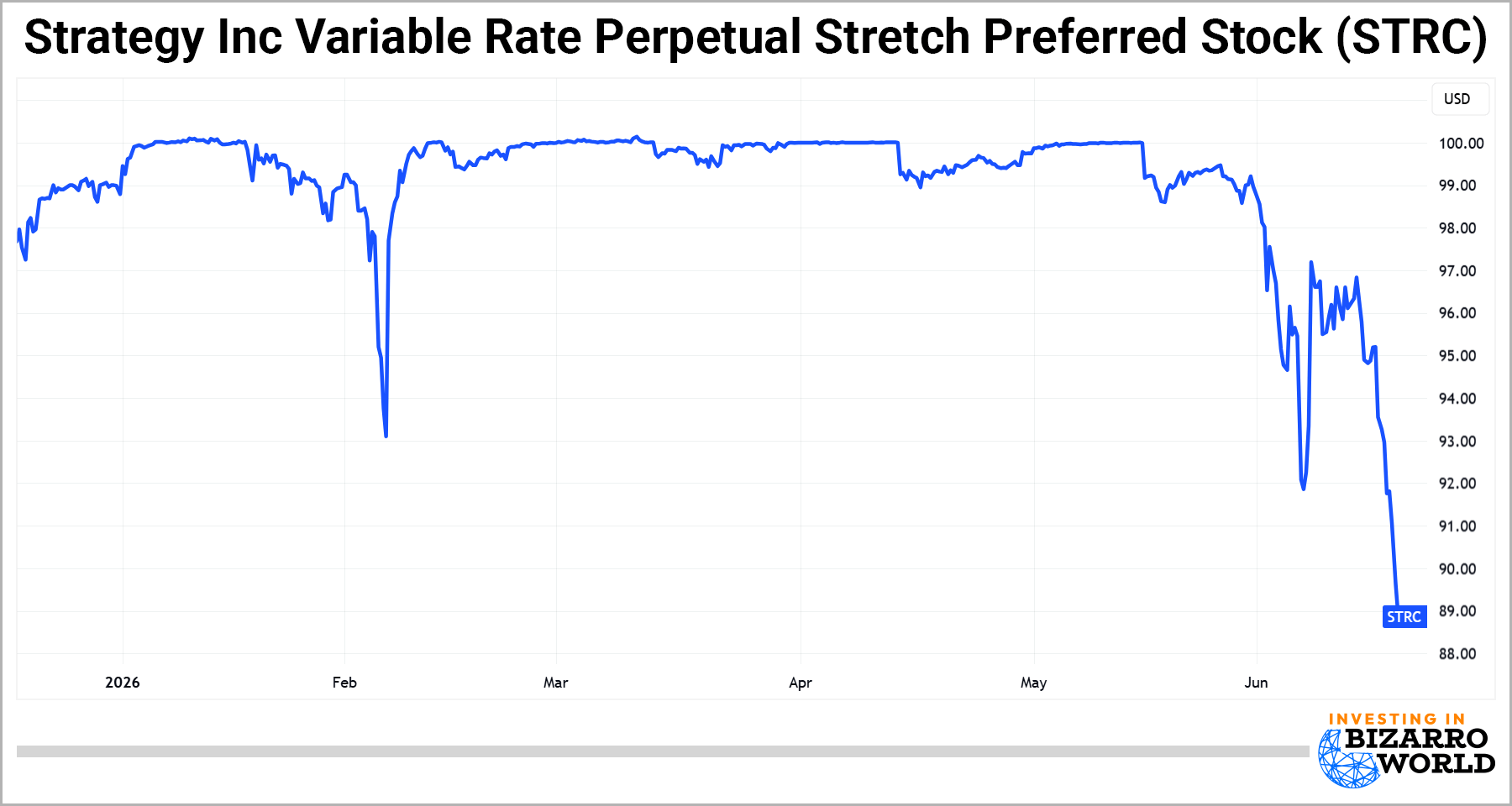
What’s new in the last few weeks is that STRC is no longer gliding gently around par after ex‑dividend; it’s now trading meaningfully below $100, despite the double‑digit yield. That is the market finally saying out loud what the math has been whispering for months:
- The headline yield is high because the risk is high, not because someone found free money.
- The more STRC grows, the more it sits on top of the Bitcoin stack as a senior claim, ahead of the common.
- If BTC underperforms, or capital‑market appetite fades, the structure can shift from “clever” to “fragile” very quickly.
This is exactly the kind of pro‑cyclical behavior I described in “Infinite Money Glitch”: they raise the most capital when Bitcoin is strong, they add the most leverage when confidence is highest, and then they have to bribe the market with higher yield to keep the machine spinning when conditions worsen.
Why This Matters More Now
When I wrote about the glitch last year, it was still mostly an abstract risk. The premium over net asset value was shrinking, but the story still felt intact. Today, several things have changed:
- BTC is in what looks like a cyclical bear market, not a fresh parabolic melt‑up.
- STRC’s yield has climbed, shortening the “years of coverage” runway unless BTC resumes a strong uptrend.
- The preferred now trades at a persistent discount to par, signaling that income investors are no longer treating it like a safe, bond‑like instrument.
- Serious research and op‑eds are asking the same question now: is this model sustainable, or was it always a one‑time arbitrage dressed up as a strategy?
In other words, the risks that were theoretical when I first called it an “infinite money glitch” are now being priced into the securities themselves.
Where I’m Covering This Now
Because this story is evolving week by week (BTC price, STRC yield, discounts to par, new filings, changing covenants) a single editorial can’t keep up with reality.
That’s why, if you want to follow how the glitch plays out in real time, I’m doing the ongoing work inside my publications here at Digest Publishing:
- Tracking STRC’s yield, price, and “years of BTC” coverage as they move.
- Mapping BTC downside scenarios to STRC stress points and potential Strategy solvency paths.
- Separating actual filings and math from X threads, hopium, and doom‑posting.
- Situating all of this within the broader Bitcoin cycle view we’ve been talking about.
If “The Infinite Money Glitch” was the blueprint, Crypto Cycle is where I’m watching whether the machine grinds forward, mutates into something more sustainable, or finally runs into the arithmetic I’ve long feared.
I also cover crypto more generally in my tech publication Digital Dispatch along with emerging tech trends and the stocks set to profit the most.
You can click here to check it out.
Keep coming back,

Chris Curl
Editor, Bizarro World