Chris Curl,
Editor
June 4, 2026
Goldman (NYSE: GS) is finally admitting what I've been saying for months: the next big leg of the AI trade won’t be about screens and servers…
It'll be about bodies.
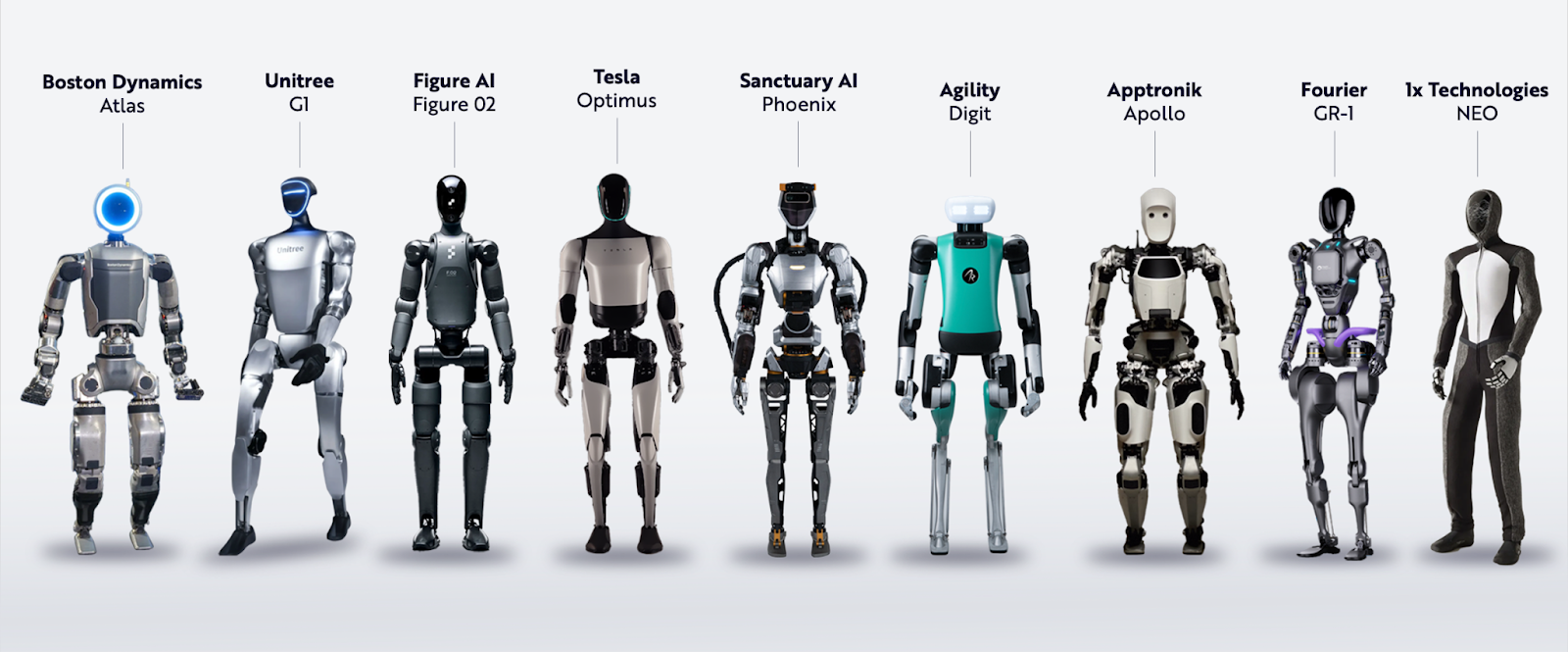
According to them, “this is an early‑cycle opportunity to position ahead of a multi‑year capital rotation into the robotics ecosystem.” That’s polite Wall Street code for: the money is about to move from pure chips into humanoid robots and everything that makes them work.
The first phase of the AI boom was abstract. You couldn’t see it doing anything in the real world. It was about models, tokens, data centers, and massive GPU clusters humming away in windowless buildings. It was a great trade but ultimately, it all lived on screens.
Goldman’s call is essentially this: the next phase is physical. The intelligence we’ve trained in the cloud is going to spill out into humanoid robots, warehouse bots, factory cobots, autonomous vehicles, and service machines that live in the same messy environments you do. Think:
- Humanoid workers loading pallets and sorting packages
- Mobile robots roaming hospitals, hotels, and big‑box stores
- Robotic arms in small and mid‑size factories that never could justify heavy automation before
That means capital will start rotating from “just sell the shovels for the gold rush” (chips alone) to “own the mines, the railroads, and the heavy machinery” (the full robotics stack).
What “multi‑year capital rotation” actually means
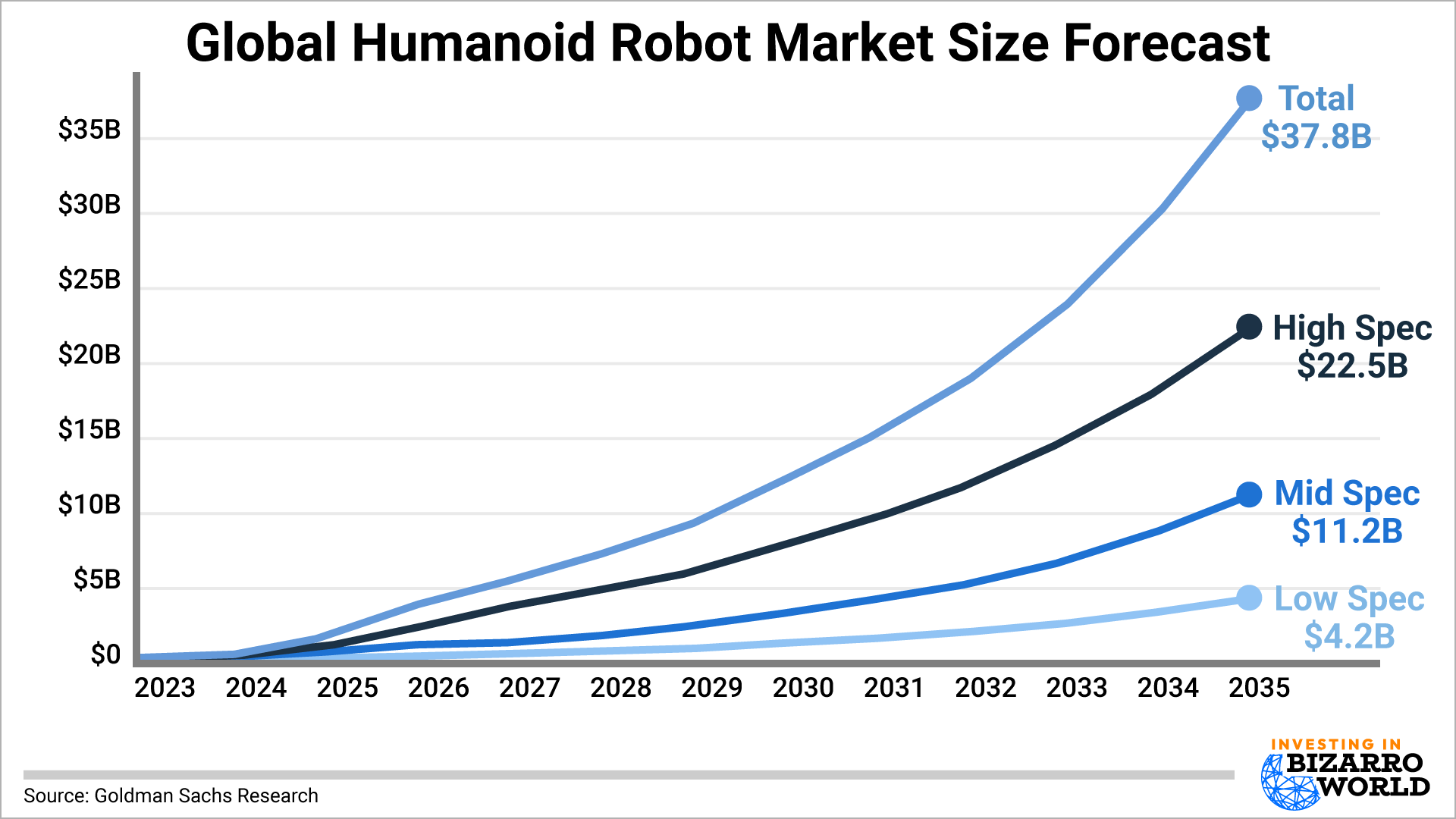
When a bank like Goldman talks about a “multi‑year capital rotation,” they’re not talking about a quick trade. They’re talking about a slow, steady shift in how trillions of dollars get allocated:
- Benchmark indices and sector funds start increasing their robotics exposure
- Corporate capex budgets tilt away from incremental human hiring and toward automation
- Sovereign wealth funds and pensions look for “AI + labor replacement” themes instead of just “AI + cloud”
In practice, that tends to look boring on the surface (index rebalances, sector overweight notes, “thematic baskets”) but it shows up very non‑boringly in the charts of the right names. You get years where the robotics ecosystem steadily outperforms while the crowd is still arguing about whether the trend is real.
Early‑cycle is where the asymmetry lives. The narrative is just starting to crystallize. The flows haven’t fully moved yet. But the underlying industrial and technological shift has already begun.
How to actually trade it (big picture)
Goldman will give you a neat, sanitized basket and a few obvious tickers. That’s fine as far as it goes. But if you want to squeeze real edge out of this theme, you need to think in layers:
- Brains – The chips, compute, and software that let robots see, plan, and act. This is where the current AI winners live, and they won’t disappear. But the winners may shift toward those best positioned for on‑device and edge inference, not just giant cloud training runs.
- Bodies – The robot OEMs: humanoids, warehouse bots, agricultural robots, logistics machines. These are the names that will see revenues explode as pilot projects turn into full fleet deployments.
- Nervous systems – Sensors, cameras, lidar, force feedback, power electronics, batteries, actuators. The less glamorous companies that quietly take a cut of every robot sold because without them, nothing moves.
- Infrastructure – Simulation platforms, digital twins, robot‑as‑a‑service providers, deployment and maintenance networks. The software and service layer that will “rent out” robotic labor the way cloud providers rent out compute today.
The mistake most investors make is to grab a headline humanoid name and stop there. The smarter move is to build exposure across the stack, with a bias toward the bottlenecks and tollbooths, those spots where every additional robot on the planet means more money rolling through the same small group of companies.
Where Digital Dispatch comes in
This is exactly the kind of shift Digital Dispatch was built for.
Long before Goldman started talking about a “multi‑year rotation,” we were following the breadcrumbs: cost‑crossover math showing robots undercutting human labor, early humanoid pilots in factories and warehouses, capex plans quietly shifting from headcount to automation, and live demos of robots working multiple days straight without breaks or supervision.
Our job at Digital Dispatch is to:
- Separate demo theater from real, scalable deployment
- Identify which players in each layer of the stack are likely to become de facto standards
- Spot mispricings where the narrative hasn’t caught up to the order book or the strategic position
Goldman just handed you the macro headline: the AI trade is growing arms and legs. The question now is whether you let their call wash over you as another note in a noisy feed, or whether you use it as a signal to start building positions before that “multi‑year rotation” fully shows up in the indices.
Digital Dispatch is where I’m mapping that opportunity in detail: who stands to gain, who’s mostly hype, and how to build exposure that survives the inevitable volatility while this theme goes from early‑cycle to consensus.
Goldman’s big call says the robots are coming.
Click here to make sure you’re not just watching them roll out but getting paid every time they clock in.
Keep coming back,

Chris Curl
Editor, Bizarro World