Nick Hodge,
Publisher
Oct. 13, 2026
Editor’s Note: Please enjoy the following current market analysis, which comes from the October issue of Foundational Profits. —Nick
October has ushered in new all-time highs for the stock market.
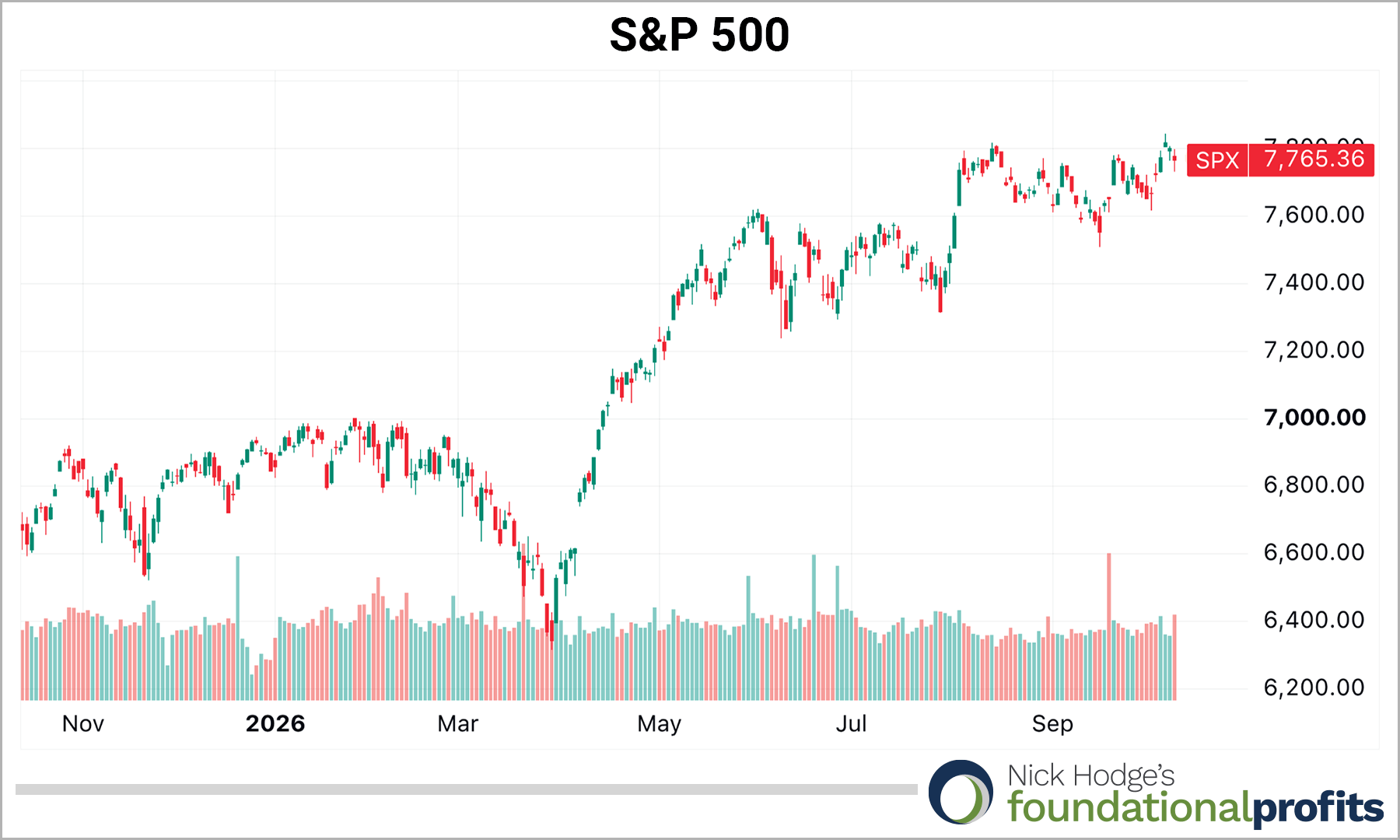
The stock market isn’t spooked despite scary action in the bond market and US dollar strength that has quickly materialized.
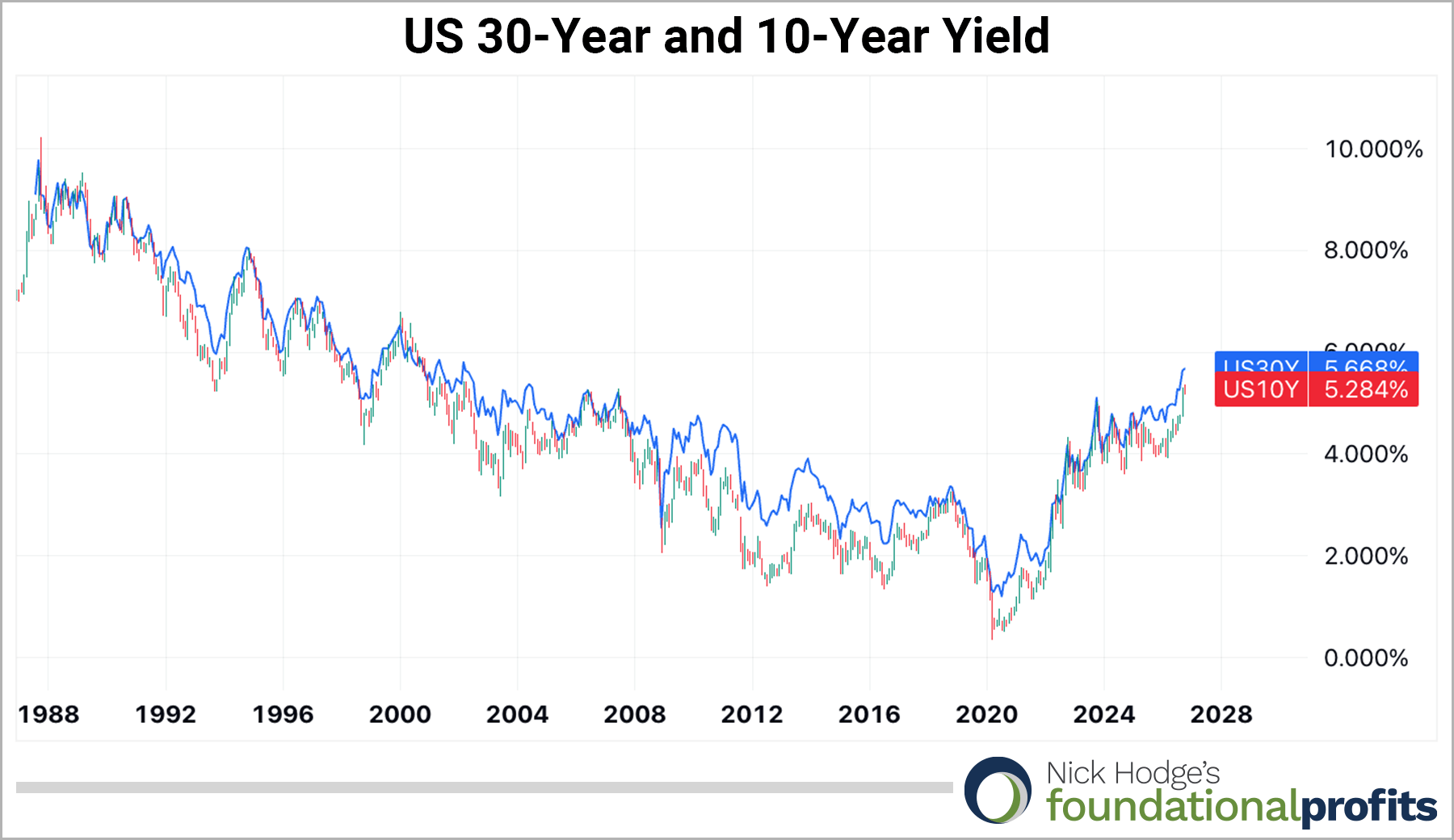
On the bond side of things, we haven’t seen a 10-year or 30-year yield this high since spring of 2002. No one born in the last 40 years has ever seen this type of rising yield environment.
The dollar’s move, at 16-month highs, is less historic, but is still reflecting tightening financial conditions and is providing headwinds for precious metals and many groups of stocks.

Indeed, the move to new all-time highs in the US stock market over the past month has been entirely driven by the Information Technology sector. The other ten sectors of the S&P are all negative over the same time period.
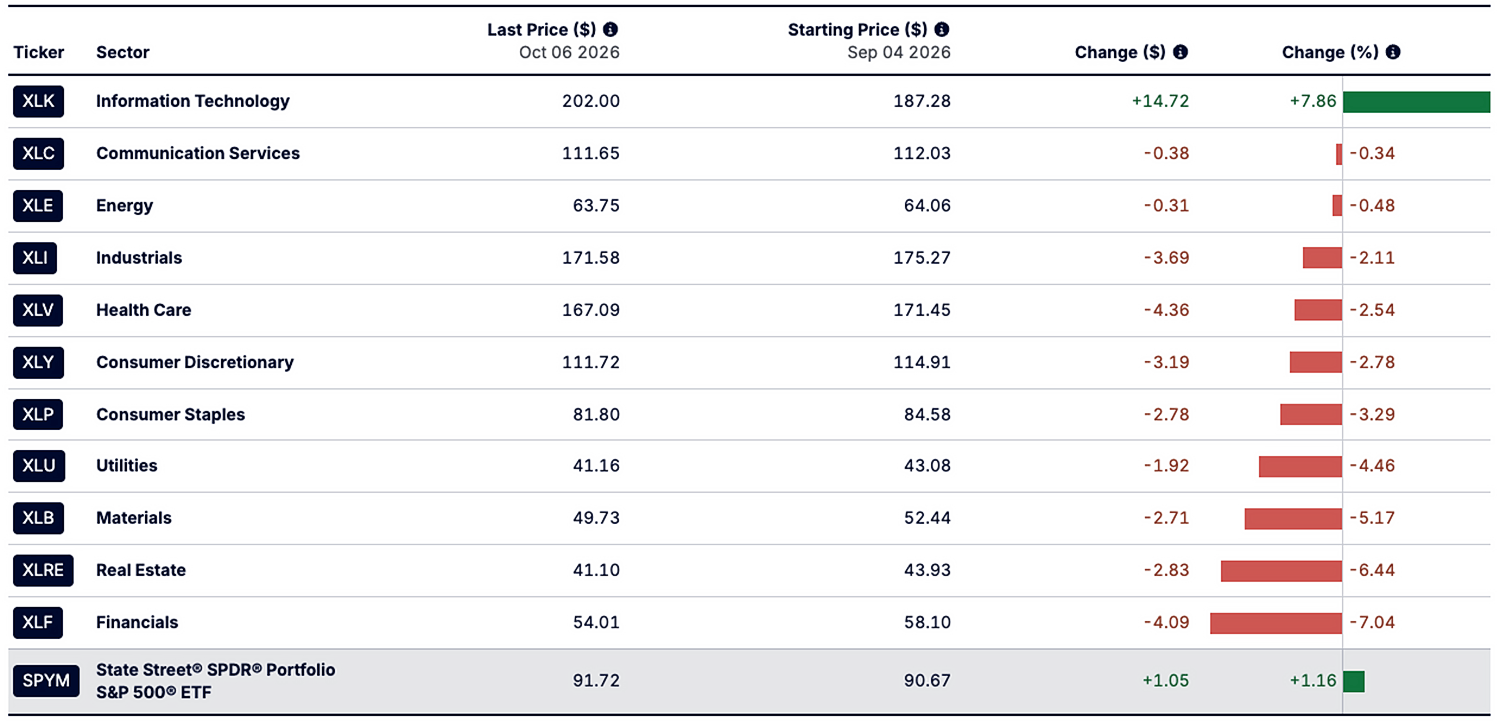
What we’re seeing is disappearing breadth in the market. The ten largest stock positions — all tech-related — now account for nearly 40% of the S&P 500’s weight, giving a handful of companies enormous influence over the index.

Because of the ongoing tech exuberance, that concentration has allowed the market to defy bond and dollar reality, for now.
Goldman Sachs recently published research that “points to $1 trillion of AI-related investment around the globe in 2026, including $581 billion in the US.” Going forward, their research implies that “AI capex will rise from 1.8% of GDP in the US (with global AI investment totaling 0.9% of global GDP) in 2026 to 2.5% of GDP in the US (1.3% globally) in 2027, with a further increase to 2.8% (1.4% globally) in 2028.”

That +$1 trillion figure is well above oft cited numbers in the $600-$700 billion range like those I discussed in the February issue earlier this year.
You might recall that earlier this year we put ~73% in the bank, riding the Tortoise AI Infrastructure ETF (NYSE: TCAI) from January through mid-June. There was more breadth in the market then, and a lower rate environment was rewarding the industrial and utility names that were powering the AI buildout.
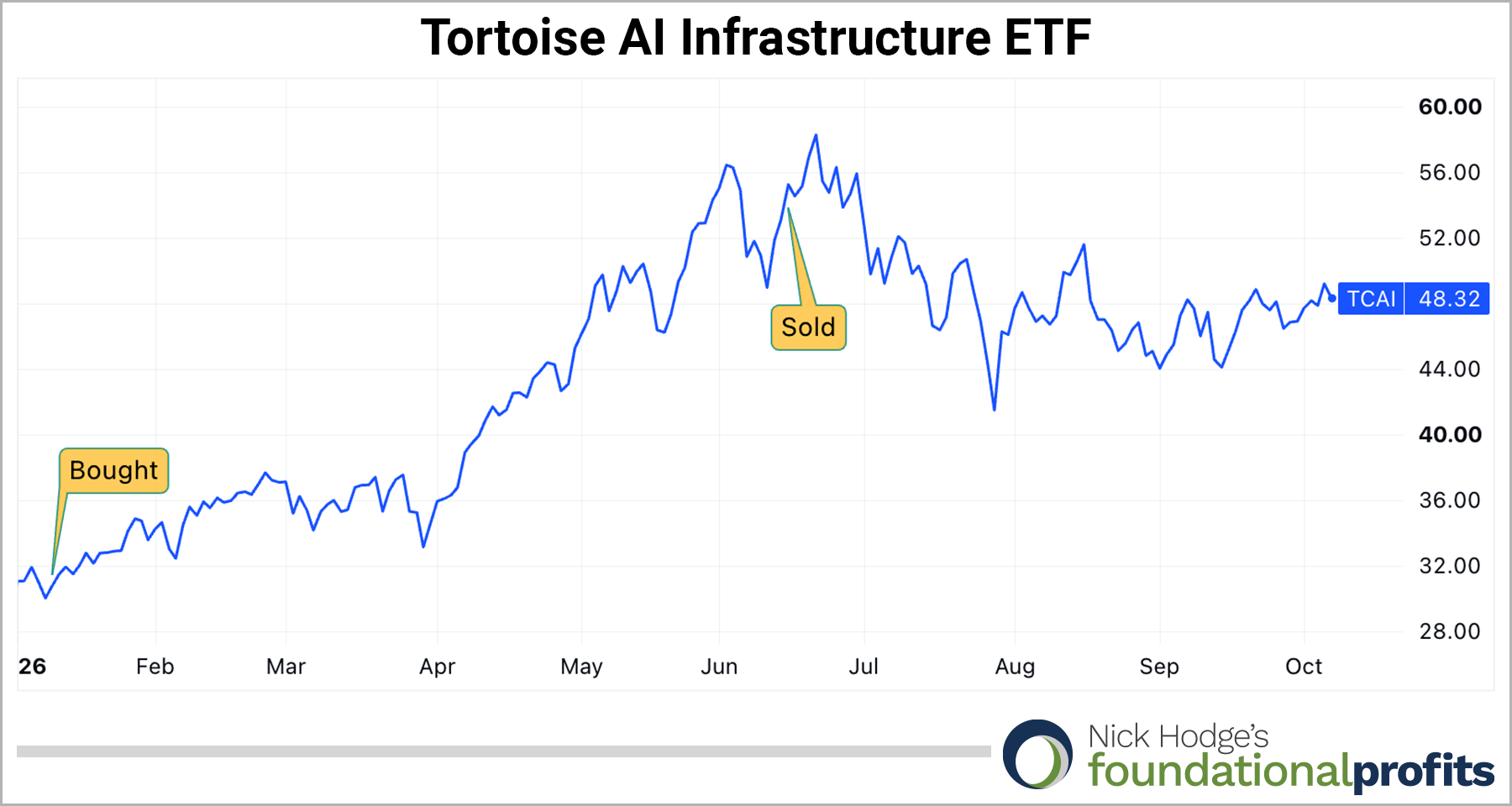
What we’ve seen since then is the aforementioned narrowing of breadth, with the market rewarding the main hyperscalers — which are also the market’s biggest drivers — with little worry about rising rates or when the AI spending spree comes to an end.
Goldman reiterates this worry-not view, noting that “these levels are consistent with the 2%-5% of GDP peak investment impulses observed in prior general-purpose technology buildouts” and that “even significant upward revisions would leave the level of AI investment as a share of GDP comfortably within the historical range observed in prior technology cycles.”
In the July issue, the month after we sold TCAI, we bought the State Street SPDR Portfolio S&P 500 Growth ETF (NYSE: SPYG) to “avoid missing growth if mega-cap leadership resumes.” And that’s exactly what has played out.

The leading tech stocks and S&P growth are the same group of stocks. Take a look at the top ten holdings for both the Technology Select Sector SPDR ETF (NYSE: XLK) and the SPDR Portfolio S&P 500 Growth ETF (NYSE: SPYG). Six of their top ten holdings overlap.
Right now, growth and tech are six of one and a half dozen of another.
And we’ll keep some eggs in that basket until macro setup changes again, which I expect early next year.
If you are not yet a member of Foundational Profits, you can get the entire October issue and the full portfolio with current allocation weights by clicking here.
Call it like you see it,

Nick Hodge
Publisher, Bizarro World